
A wooden fence might catch your eye for its classic charm and versatility when considering a new fence. Why choose a wooden fence? Wooden fences can seamlessly blend with various architectural styles, offering aesthetic appeal and functional benefits like sound insulation and privacy. However, they’re not without their challenges, such as the need for regular maintenance to stop rot and warping. So, what makes wooden fences a popular choice despite these drawbacks? Let’s explore the pros, cons, and the most sought-after designs to help you decide if a wooden fence fits your property.
Key Takeaways
- Wooden fences offer versatile design options, such as picket, shadow box, and lattice-top styles, to match various architectural preferences.
- They provide natural aesthetics, enhancing outdoor environments with organic textures and patterns.
- High-quality woods like cedar and redwood offer durability and natural resistance to weather and insects.
- Wooden fences require regular maintenance, including staining and inspections, to prevent rot and insect damage.
- Sustainable sourcing and lower carbon footprint make wooden fences more environmentally friendly than vinyl or metal alternatives.
Get essential tips for prolonging fence life in our next blog: How to Protect Your Wood Fence.
Benefits of Wooden Fences
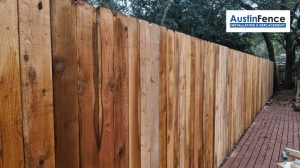 When considering the benefits of wooden fences, one of the most compelling advantages is their versatility in design.
Wooden fences offer a range of styles, from classic picket and lattice to modern horizontal slats, allowing you to customize your outdoor space to reflect your aesthetic. The variety of fence materials available, such as cedar, redwood, and pine, each provide unique durability, color, and texture characteristics.
Installation techniques for wooden fences are straightforward yet effective, making it a popular choice among homeowners.
You can employ methods such as setting posts in concrete for enhanced stability or using metal post brackets for easier replacement and maintenance. This adaptability in installation means you can tailor the procedure to fit your precise needs and site conditions.
Moreover, wooden fences seamlessly blend with natural surroundings, creating a welcoming and warm atmosphere.
Wooden fences are not just barriers but a canvas for creativity. Whether you’re looking for rustic charm or a sleek, contemporary look, they enable you to achieve a cohesive and inviting outdoor environment.
Drawbacks of Wooden Fences
Despite the numerous benefits wooden fences offer, it’s important to recognize their potential drawbacks. One of the primary concerns is the susceptibility of different wood types to environmental factors. For instance, while cedar and redwood are more unsusceptible to rot and insects, they still require regular maintenance to sustain their durability.
Although more affordable, pine often requires chemical treatments to prevent pests and decay, making it less environmentally friendly.
Installation challenges also play a significant role. Unlike vinyl or metal fences, wooden fences often require precise measurements, leveling, and anchoring to guarantee stability. This process isn’t only labor-intensive but can also be complicated by the natural variations in wood.
Warping, splitting, and knotting can lead to additional adjustments and potential structural weaknesses.
Moreover, wooden fences are prone to weathering. Exposure to sun, rain, and fluctuating temperatures can cause wood to fade, crack, or warp, necessitating frequent repairs and treatments.
This ongoing maintenance can be time-consuming and pricey, detracting from the initial appeal of wood’s natural beauty.
Cost Considerations
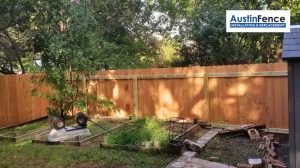 One critical factor to consider when considering a wooden fence is the overall cost, which encompasses initial installation and long-term maintenance expenses.
Wooden fences generally have a lower upfront cost than other materials, making them an attractive option for many homeowners. However, it’s crucial to understand that the initial savings may come with future financial commitments.
When you evaluate the installation expenses, factors like the type of wood, fence height, and labor costs can notably affect your budget. High-quality wood like cedar or redwood will cost more initially but can offer long-term savings due to its durability.
To emphasize key points, consider:
- Material Costs: Premium woods have higher upfront costs but offer greater longevity.
- Labor Costs: Professional installation guarantees longevity and structural integrity, impacting your budget.
- Long-Term Savings: Investing in quality materials can reduce future repair costs.
Maintenance Requirements
While evaluating the costs associated with a wooden fence, it’s equally important to consider its maintenance requirements.
Maintaining a wooden fence demands regular attention and a systematic approach to guarantee it remains robust and visually appealing. First, periodic fence staining is essential. This process enhances the wood’s aesthetic appeal and protects against moisture and UV damage. Typically, you should re-stain your fence every 2-3 years, depending on your local climate and the type of stain used.
In addition to staining, routine inspections are critical for identifying any signs of wear, such as rot, insect damage, or loose boards. When you spot issues, prompt repair techniques can prevent minor problems from escalating. For instance, replace damaged panels and reinforce loose posts using galvanized screws to promote longevity.
Furthermore, routinely cleaning the fence with a mild detergent and water will help clear any accumulated dirt or mildew, further preserving its integrity.
Durability and Longevity
When evaluating the durability and longevity of wooden fences, you’ll find that these structures can offer remarkable resilience if properly maintained. The secret to a long-lasting wooden fence is its weather resistance and material quality. High-quality wood types like cedar and redwood possess natural oils that repel moisture and bugs, making them excellent choices for outdoor use.
To guarantee your fence stands the test of time, consider the following:
- Proper Sealing: A high-grade sealant protects the wood from moisture, preventing warping and rotting.
- Regular Maintenance: Routine inspections and timely repairs can extend the fence’s lifespan.
- Quality Installation: Confirming professional installation guarantees that the fence is correctly anchored and aligned, reducing susceptibility to weather damage.
Weather resistance is necessary for the fence’s longevity. Treated lumber, for instance, undergoes a process to enhance its durability against harsh weather conditions.
Additionally, the material quality directly impacts how well the fence withstands environmental stressors like wind, rain, and UV radiation. By investing in robust materials and adhering to a consistent maintenance schedule, you’ll cultivate a strong fence that complements your property for years.
Environmental Impact
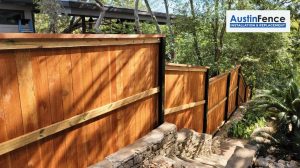 Evaluating the environmental impact of wooden fences involves considering several key factors that affect sustainability.
First, the source of the wood is critical. Opt for wood harvested from sustainably managed forests, certified by associations like the Forest Stewardship Council (FSC). This guarantees that the wood comes from responsibly managed forests that promote biodiversity and ecosystem health.
Another sustainability factor is the carbon footprint associated with production and transportation. Wooden fences typically have a lower carbon footprint than alternatives like vinyl or metal, which require energy-intensive manufacturing processes. However, this advantage can be negated if the wood is transported long distances. Choosing locally sourced wood can considerably reduce this impact.
Additionally, the lifecycle of a wooden fence plays a role. Proper maintenance can extend its life, reducing the need for frequent replacements and conserving resources.
Natural treatments and finishes can also minimize toxic chemicals, reducing environmental harm.
Privacy and Security
Regarding privacy and security, wooden fences offer significant advantages that make them popular for property owners.
First and foremost, they provide an excellent boundary definition, clearly demarcating your property lines and establishing a sense of ownership and belonging. This clear boundary deters intruders and reduces the likelihood of trespassing.
Additionally, wooden fences offer superior sound insulation, which is particularly beneficial if you live in a noisy neighborhood or near a busy street. The dense, solid wood panels can absorb and block sound, creating a calmer and more peaceful environment within your property.
Finally, wooden fences’ height and opacity make them ideal for ensuring privacy. Whether hosting a backyard gathering or enjoying a quiet afternoon, a wooden fence shields you from prying eyes.
Consider these benefits:
- Enhanced boundary definition: Clearly define your property lines and deter intruders.
- Improved sound insulation: Reduce noise pollution for a more serene environment.
- Increased privacy: Shield your activities from neighbors and passersby.
Aesthetic Appeal
When considering a wooden fence, you’re tapping into a natural beauty enhancer that blends with outdoor landscapes.
Its versatile design options allow for customizations that can complement any architectural style.
Additionally, the timeless visual charm of wood guarantees your fence remains an elegant feature for years.
Natural Beauty Enhancer
A wooden fence undeniably enhances the natural beauty of your property, providing a timeless and rustic charm that other materials often fail to match.
Wood’s natural aesthetics and organic materials create a smooth integration with the surrounding environment. It’s not just a barrier; it’s a statement that speaks to your appreciation for nature and craftsmanship.
When you opt for a wooden fence, you’re choosing a material that ages gracefully and enhances the visual appeal of your landscape.
Here’s why a wooden fence is a superior choice for those who value natural beauty:
- Natural Aesthetics: Wood’s inherent grain patterns and color variations add a unique character that synthetic materials can’t replicate.
- Organic Materials: Wood is a natural product that harmonizes with outdoor settings, making it the perfect backdrop for gardens and green spaces.
- Timeless Appeal: Unlike trend-driven materials, wood has a classic appeal that remains stylish through changing seasons and design trends.
Versatile Design Options
Beyond its natural beauty, a wooden fence offers a remarkable range of versatile design options that cater to various aesthetic preferences. You can customize a wooden fence to match your style, whether you prefer a modern, rustic, or traditional look. The flexibility in customization options allows you to choose from an array of style combinations to guarantee your fence aligns perfectly with your home’s architecture and landscape design.
Here’s a detailed table highlighting some popular design options:
Design Style | Customization Options | Best For |
Picket Fence | Height variation, paint colors | Classic or vintage-themed gardens and front yards |
Horizontal Slats | Wood type, stain finishes | Contemporary homes seeking a sleek, modern aesthetic |
Lattice Top | Decorative patterns, trim styles | Enhanced privacy with a touch of elegance |
Shadowbox Fence | Alternating boards, wood texture | Balanced privacy and airflow for suburban homes |
When choosing a wooden fence, you’re not just adding a boundary; you’re creating a statement piece that can be tailored to your taste. From intricate lattice tops to straightforward horizontal slats, the myriad of style combinations guarantees a design that resonates with your sense of belonging and enhances your property’s curb appeal.
Timeless Visual Charm
Timeless visual charm is one of the most compelling reasons to choose a wooden fence for your property.
Wooden fences exude a nostalgic appeal that resonates with a sense of community and tradition. The allure of traditional craftsmanship is unmistakable, as each plank and joint reflects a dedication to quality and detail that’s hard to replicate with other materials.
Choosing a wooden fence allows you to embrace a design that feels time-honored and uniquely yours.
Here are several reasons why wooden fences maintain their aesthetic appeal:
- Natural Aesthetic: Wood’s organic texture and grain patterns blend seamlessly with outdoor settings, offering a warm, inviting feel.
- Versatility in Design: Whether you prefer a classic picket style or a more modern horizontal layout, wood can be tailored to match your vision.
- Aging Gracefully: Over time, the wood develops a patina that enhances its nostalgic appeal, creating a fence that looks better with age.
Popular Wooden Fence Designs
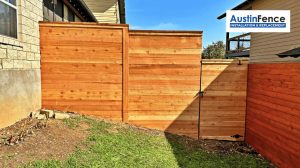 Understanding the most popular styles when choosing a wooden fence design can help you make an informed decision that balances aesthetics, functionality, and durability.
The shadow box design is a top choice for many. This style alternates pickets on either side of the fence rail, creating a semi-private barrier that allows air to flow through while obstructing direct views. It’s ideal if you want a neighbor-friendly fence that looks good on both sides.
The picket style is another classic option, often associated with a traditional, homey feel. This design features evenly spaced vertical boards, usually capped with pointed tips. Picket fences are perfect for defining boundaries without enclosing your space entirely, offering a welcoming vibe that is especially popular in suburban settings.
For those desiring greater privacy, the board-on-board fence provides excellent coverage. Overlapping boards guarantee no gaps, making it a robust option for backyard sanctuaries.
Finally, the lattice-top fence combines solid panels with a decorative lattice pattern at the top, offering privacy and an elegant design twist.
Choosing any of these popular wooden fence designs will enhance your property’s curb appeal and foster a sense of belonging in your community.